Not All Kraft Paper Performs the Same Job: Matching Grade to Application

When a buyer opens a notebook, runs a hand across a printed page or checks a reel of kraft paper, the first things they notice are usually properties of the finished sheet. Is it smooth? Is it bright enough? Does it print cleanly? Does it feel strong? Does it hold its shape?
Those questions are valid. But none of them begins at the point where the finished paper is packed and dispatched.
They begin with fibre.
The choice of raw material influences what a paper mill can achieve further down the line. Fibre cleanliness, strength, bonding behaviour, brightness and drainage all have a bearing on the way a sheet forms and, ultimately, how it behaves in its intended application.
That is why pulp selection deserves more attention than it often gets in a purchasing conversation.
It is tempting to treat pulp as a commodity input and the finished paper as the real product. For a manufacturer, the two are much more closely connected. A paper designed for a bright printed page is asking different things of its fibre furnish than a kraft sheet designed to carry a load.
The word “pulp” can make the raw material sound interchangeable. It isn’t.
Different pulps have different fibre characteristics. Those differences can affect brightness, bonding, formation, drainage, surface quality and strength. The significance of each property depends on what the paper is eventually expected to do.
Think about two ordinary products: a school notebook and a packaging liner.
The notebook needs a surface that works well for writing and printing. Clean formation and a suitable appearance matter. The liner is part of a packaging structure. Strength, bonding and structural performance become much more important.
Both are paper. The manufacturing priorities are not the same.
That is the basic reason pulp selection should start with the end use rather than with a generic idea of what constitutes a “good” pulp.
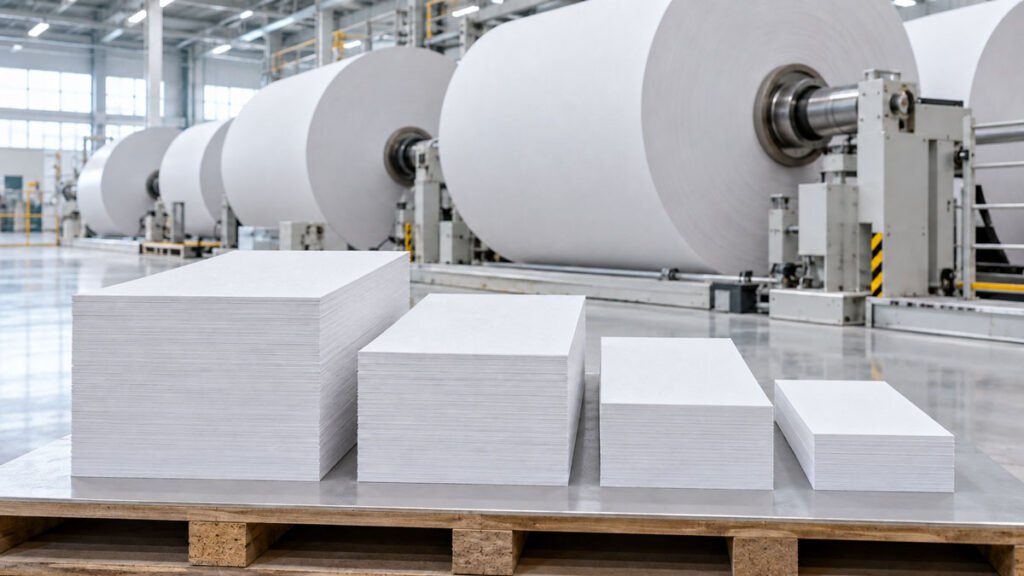
KR Papers’ HiBrite Pulp is a high-brightness pulp made from renewable agro-fibres. The company’s current product information highlights high brightness, stable viscosity, clean fibre quality and low impurity levels. It is positioned for copier, writing, coated and uncoated papers, tissue and premium printing applications. Why do those characteristics matter?
Start with brightness. When the finished paper is intended for printing or writing, the visual appearance of the sheet matters. A cleaner fibre furnish can also support consistent formation and a more controlled surface.
Stable viscosity and low impurity levels are manufacturing considerations too. Paper is produced continuously. Raw-material behaviour cannot be looked at only as a laboratory number. It has to fit into a process that needs to keep running consistently.
This is where the raw material decision begins to connect with manufacturing efficiency.
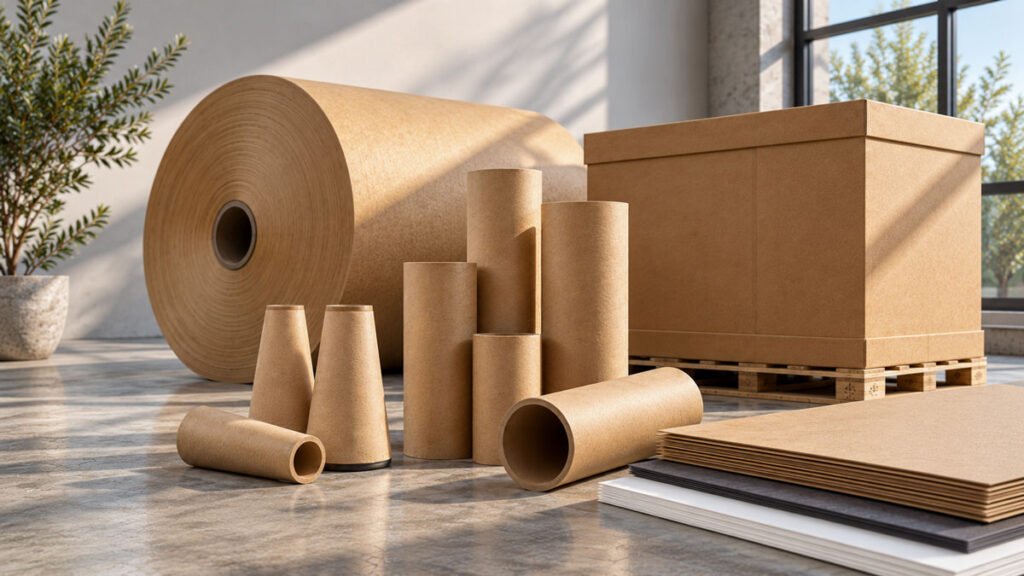
KR Papers’ NaturaBrite Pulp is a natural, high-strength pulp made from non-wood agricultural fibres. The product information highlights strong fibre bonding, low dirt content, a natural brown tone and good drainage. It is intended for kraft paper, liner board, wrapping sheets and sack-grade production.
The difference in positioning is telling.
The purpose here is not to chase maximum whiteness. The natural shade remains part of the material’s character, while fibre bonding and strength become central to the job the pulp is being asked to perform.
For packaging paper, that can be the more relevant combination.
A manufacturer making a kraft grade is not trying to make its raw material behave like a fine writing-paper furnish. It is trying to create a sheet that works as packaging material.
Paper is a network of fibres held together in a sheet. The strength of that network depends on how the fibres interact with one another and how the manufacturing process develops the sheet structure.
Good fibre bonding can contribute to the mechanical integrity of the finished paper. That becomes particularly relevant when paper is folded, converted, wound, stacked or exposed to load.
This is one reason raw-material selection cannot be separated completely from the final application.
A packaging manufacturer may be far more interested in how a fibre furnish contributes to strength than in whether it produces the brightest possible sheet.
A printer may have a different priority.
Neither buyer is wrong. They are solving different problems.
Another characteristic that deserves more attention is drainage.
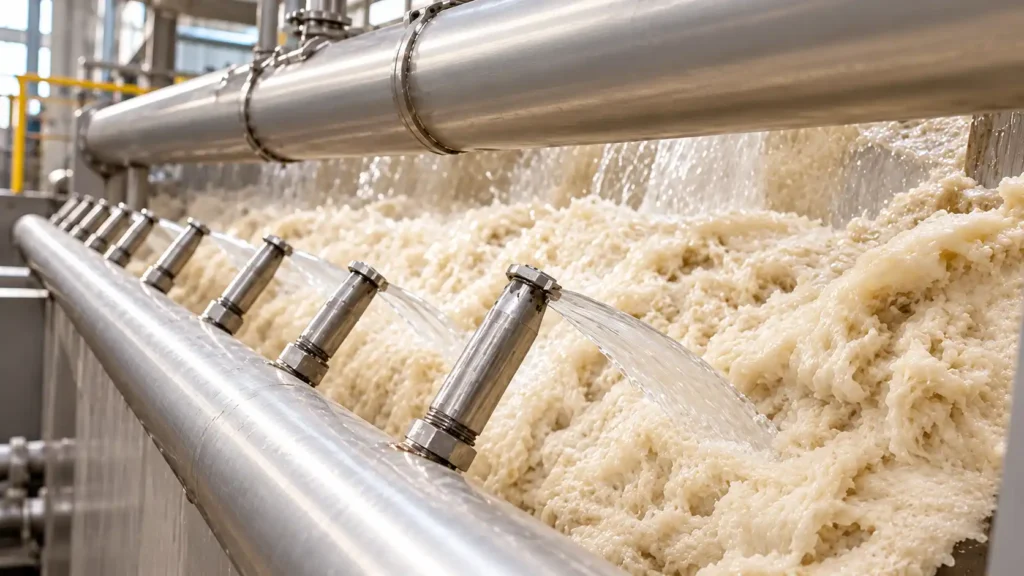
During paper formation, water has to move through the fibre mat efficiently enough for the process to remain stable. The drainage behaviour of the furnish can therefore influence machine operation and sheet formation.
NaturaBrite Pulp is described by KR Papers as having good drainage. That characteristic sits alongside its strength and fibre-bonding properties because the pulp is intended for industrial kraft and packaging applications.
This is a useful reminder that a raw material specification can matter in two places at once: in how efficiently the paper is manufactured and in how the finished paper performs.
A pulp specification becomes much more useful when it is connected to the paper that will be made from it.
Instead of asking only for a generic pulp grade, a paper manufacturer can ask:
These questions move the discussion from raw-material procurement to actual manufacturing requirements.
Consistency is another reason the choice matters.
A paper machine does not get to reset itself every few hours because the raw material has changed character. Manufacturers need a furnish that behaves predictably enough for the process and the target grade.
That does not mean every production run behaves identically. Paper is a natural-material-based product, and manufacturing always involves controlled variation. It means the raw material should be selected and managed with the finished specification in mind.
For large-volume paper production, that relationship becomes particularly important. Small differences in raw material behaviour can become much more visible when multiplied across thousands of tonnes of output.
This is perhaps the most useful point to take away.
A high-brightness pulp is not automatically the right answer for every paper grade. A high-strength unbleached pulp is not automatically the right answer either.
The better question is what the finished paper needs to achieve.
For writing and printing grades, brightness, clean fibre quality and surface characteristics can be important. For kraft and packaging grades, strength, bonding, drainage and structural behaviour may carry greater weight.
In other words, pulp selection is an exercise in matching characteristics to purpose.
There is another reason this discussion is increasingly relevant for manufacturers working with agro-based raw materials.
KR Papers uses agricultural materials including bagasse and wheat straw in its paper-making operations. The company’s product portfolio includes both writing and printing papers and kraft papers, alongside pulp produced from renewable agro-fibres.
That makes the raw-material question particularly interesting. Agricultural fibres are not simply a substitute for another fibre source. They need to be processed and controlled to produce pulp with characteristics suited to the paper grade being targeted.
The journey from agricultural residue to a usable paper sheet is therefore a manufacturing story as much as a sustainability story.
If you work in paper procurement, production or product development, it can help to picture the process backwards.
Start with the finished application.
What does the customer need the paper to do?
Then identify the paper properties required to deliver that performance.
Then work backwards again to the furnish and fibre characteristics that can support those properties.
That chain looks something like this:
Application → Paper properties → Fibre requirements → Pulp selection → Manufacturing process
The sequence matters because the first question defines the others.
Paper quality is visible in the finished sheet, but it is built much earlier.
The pulp determines the starting point from which the paper manufacturer develops the sheet. Brightness, cleanliness, fibre bonding, drainage and other characteristics can become important depending on the final application.
KR Papers’ bleached and unbleached pulp grades illustrate this difference. HiBrite Pulp is positioned around brightness and clean fibre quality for writing, printing and related applications, while NaturaBrite Pulp is positioned around strength, bonding and drainage for kraft and packaging papers.
So when evaluating paper quality, it is worth looking one step further back.
Before there is a sheet, there is a fibre decision.
And that is where pulp selection begins.
At KR Papers, we craft premium, eco-friendly paper solutions that blend quality, innovation, and sustainability to meet diverse customer needs.
© 2026 KR Pulp and Papers Limited. All rights reserved.
WhatsApp us