Not All Kraft Paper Performs the Same Job: Matching Grade to Application

When buying paper, most procurement discussions begin with the grade.
What GSM is required? What strength? What surface? What moisture level?
But there is another question that can affect what happens after the paper reaches the factory:
How should the paper arrive?
This is where custom paper sizing becomes more than a supply detail. For manufacturers and converters, the dimensions of a reel or sheet need to work with the process that follows.
The right grade in the wrong format can still create avoidable operational problems.
A paper grade defines the material characteristics.
Format defines how that material enters the next stage of production.
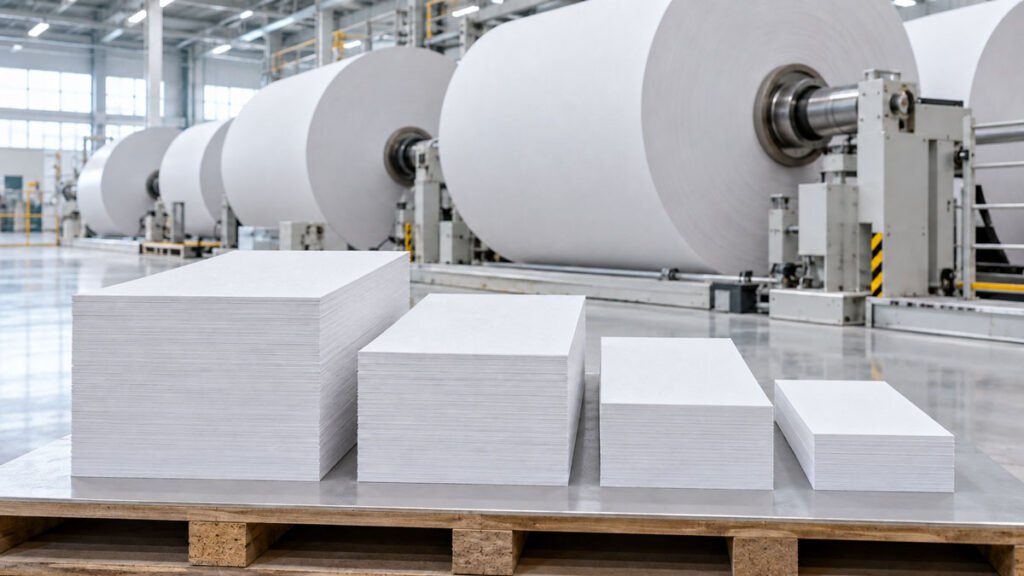
A converter may need a specific reel width for a continuous web process. Another manufacturer may require sheets that fit an existing cutting, printing or forming operation.
The paper can be technically suitable in both cases, but the required format is different.
That is why custom paper sizing should be considered alongside grade selection rather than after it.
Reel-fed processes are built around continuous movement of the paper web.
In these applications, reel width can become important because it interacts directly with the converting equipment.
An unsuitable width may require additional trimming or adjustment.
A correctly specified reel can make better use of the available web width and reduce unnecessary processing.
The exact requirement depends on the machine, the application and the finished product.
Sheet-fed production creates a different set of requirements.
The paper may be printed, cut, bound or converted in batches rather than continuously.
In these cases, sheet dimensions need to fit the equipment and the downstream operation.
A sheet that is too large may require unnecessary cutting. A sheet that is too small may create additional joins, handling or material constraints.
Again, the specification needs to follow the process.
At its simplest, custom paper sizing connects the dimensions of the paper with the physical requirements of the customer’s operation.
Depending on the application, this can involve:
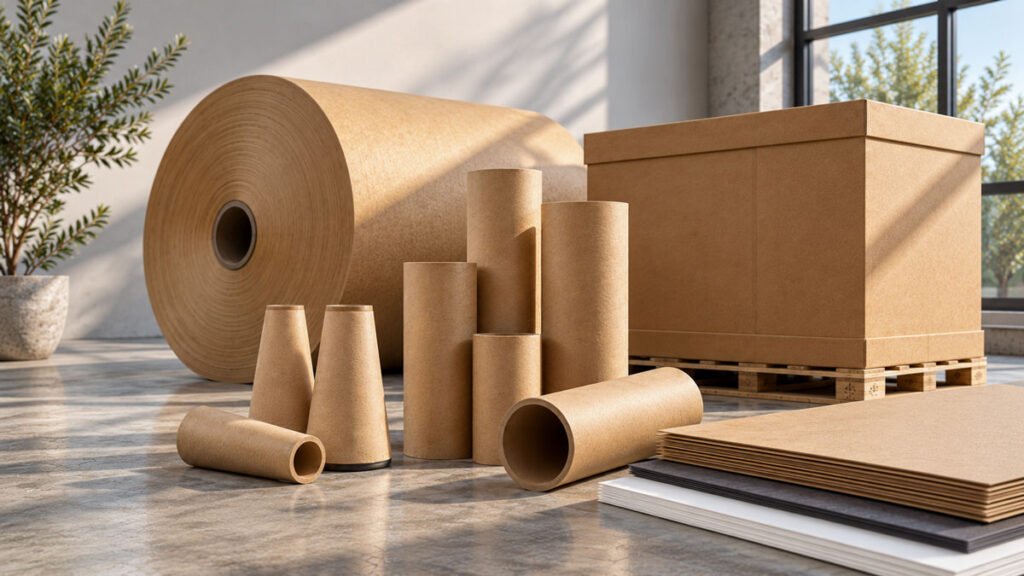
KR Papers describes custom sizing as a capability across writing and printing papers, copier papers, kraft and packaging papers, saturating kraft, industrial papers and value-added papers.
The important point is not simply that dimensions can change.
It is that the format can be specified around the application.
Format problems often appear downstream.
A reel width may create excess edge trim.
A sheet size may require additional cutting.
A format that does not suit the machine can create extra handling.
None of these problems necessarily means the paper grade itself was wrong.
The material may have been specified correctly. The format was simply not aligned with the production process.
That is why custom paper sizing belongs in the initial specification discussion.
Before finalising a paper requirement, procurement and production teams should ask:
What machine will run the paper?
Is the process reel-fed or sheet-fed?
What dimensions does the equipment require?
How much trimming is unavoidable?
How will the paper be stored and handled?
What format allows the material to move through the process most efficiently?
These questions can prevent the paper specification from becoming disconnected from the manufacturing reality.
Paper efficiency is not only about how much material is purchased.
It is also about how much of that material can be used effectively in the intended process.
That is where custom paper sizing can create practical value.
A correctly specified format can help a manufacturer reduce unnecessary cutting, improve machine compatibility and simplify handling.
The exact benefit will always depend on the equipment and application.
Paper is often treated as a material specification.
In reality, it also becomes an input to another manufacturing system.
The grade needs to perform the required job, but the format needs to fit the process.
That is why custom paper sizing should be discussed at the same time as paper grade, application and machine requirements.
At KR Papers, paper can be supplied in reels or sheets with dimensions aligned to customer requirements.
Because the right paper is not only the right grade.
It is the right grade in the right format for the right process.
At KR Papers, we craft premium, eco-friendly paper solutions that blend quality, innovation, and sustainability to meet diverse customer needs.

© 2026 KR Pulp and Papers Limited. All rights reserved.
WhatsApp us