Saturating Kraft Paper: Uses in Decorative Laminates

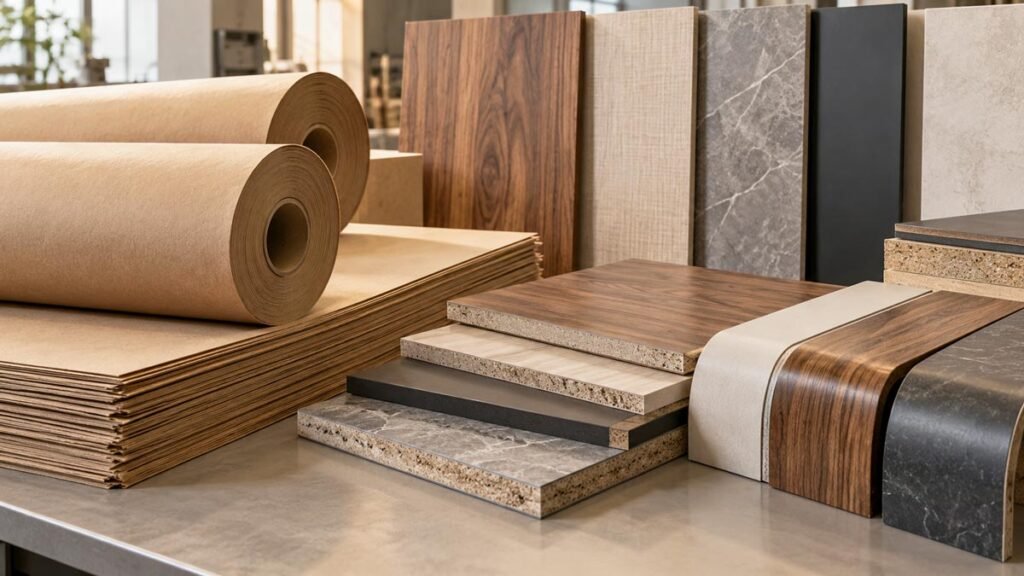
The finished surface of a desk, countertop or furniture panel is easy to notice. The paper used earlier in the manufacturing process is less visible, even though it plays a role in creating the material system behind that surface.
Saturating kraft paper is used in decorative laminate applications, where the paper becomes part of a downstream manufacturing process rather than a finished product in its own right. Understanding its role helps buyers connect the paper specification to the laminate being produced.
Saturating kraft is a paper grade used in laminate manufacturing. In these applications, the paper is selected for its role in a process that involves impregnation and the formation of a laminate structure. The paper is therefore assessed not only as a sheet, but also in terms of how it fits the requirements of the downstream process.
The precise specification depends on the laminate type, production conditions and end use. Buyers should confirm requirements with their laminate manufacturing and technical teams rather than assume that one grade will suit every process.
Decorative laminates appear across a wide range of built environments and furniture applications. Depending on the laminate system and the grade selected, saturating kraft paper can be used in applications such as:
These categories do not all serve the same purpose. Their construction, processing requirements and intended environments can differ, so the paper specification should follow the particular laminate system being manufactured.
A laminate is a downstream product made through a manufacturing process. The paper supplied for that process is one component in a wider material system.
In a typical decorative laminate workflow, selected papers are prepared and impregnated with resin before being assembled and processed under controlled manufacturing conditions. The resulting laminate can then be used by downstream manufacturers or fabricators in products such as furniture panels, desks, countertops and interior fittings.
The final appearance and performance depend on the full laminate construction and manufacturing process, not on one paper characteristic alone. It would therefore be misleading to attribute every finished-surface property to the paper in isolation.
The paper needs to be suitable for the process in which it will be used. For buyers, this means clarifying the intended laminate type and the requirements set by the manufacturing line.
Important points to discuss may include:
These considerations help keep procurement, production and quality teams aligned. A paper can only be evaluated properly when its intended role is understood.
No. A surface intended for a desk or furniture panel may be part of a different laminate construction from one designed for compact or exterior-grade use. The manufacturing route and end-use requirements can vary.
That is why saturating kraft paper should be specified against the actual application rather than selected from the product name alone. The grade, dimensions and relevant technical requirements need to be confirmed with the supplier and the downstream production team.
A clear application brief also makes it easier to assess whether a proposed paper grade fits the process. It should identify the laminate category, production conditions and any requirements that are critical to the finished product.
When sourcing paper for decorative laminate manufacturing, buyers can start with a few practical questions:
Which laminate application is this grade intended for?
State whether the requirement is for high-pressure, compact, exterior-grade or post-forming laminate production.
What basis weight and format does the process require?
Confirm the applicable range and whether the line uses reels, sheets or another specified format.
Which technical parameters must be met?
Use the laminate manufacturer’s specification and quality requirements as the reference. Avoid relying on general descriptions where measurable acceptance criteria are available.
How will the paper be handled and stored?
Agree on packaging, identification and handling expectations so that the material reaches production in a suitable condition.
Who will approve the grade for the intended line?
Make sure the purchasing decision is supported by the people responsible for production and quality.
KR Papers offers saturating kraft grades for decorative laminate applications, including high-pressure, compact, exterior-grade and post-forming laminates. The listed range includes KR Ultima, KR Premium and KR Super, within the catalogue’s saturating kraft category. Buyers evaluating saturating kraft paper should confirm the intended application and technical specification with the relevant team.
The appropriate grade should be selected in consultation with the technical team and matched to the buyer’s actual manufacturing requirements. KR Papers supplies the paper used by downstream manufacturers; the finished decorative laminate and the final furniture or surface product are produced further along the value chain.
Decorative laminate surfaces are visible in everyday environments, but the material choices that help create them begin much earlier in the supply chain.
Saturating kraft paper has a defined role in laminate manufacturing. Its suitability depends on the intended laminate system, the production process and the specification required by the downstream manufacturer.
For buyers, the best approach is to start with the end application, confirm the process requirements and select the grade accordingly. That creates a clearer link between the paper being sourced and the surface the manufacturer intends to produce.
KR Papers
At KR Papers, we craft premium, eco-friendly paper solutions that blend quality, innovation, and sustainability to meet diverse customer needs.
© 2026 KR Pulp and Papers Limited. All rights reserved.
WhatsApp us