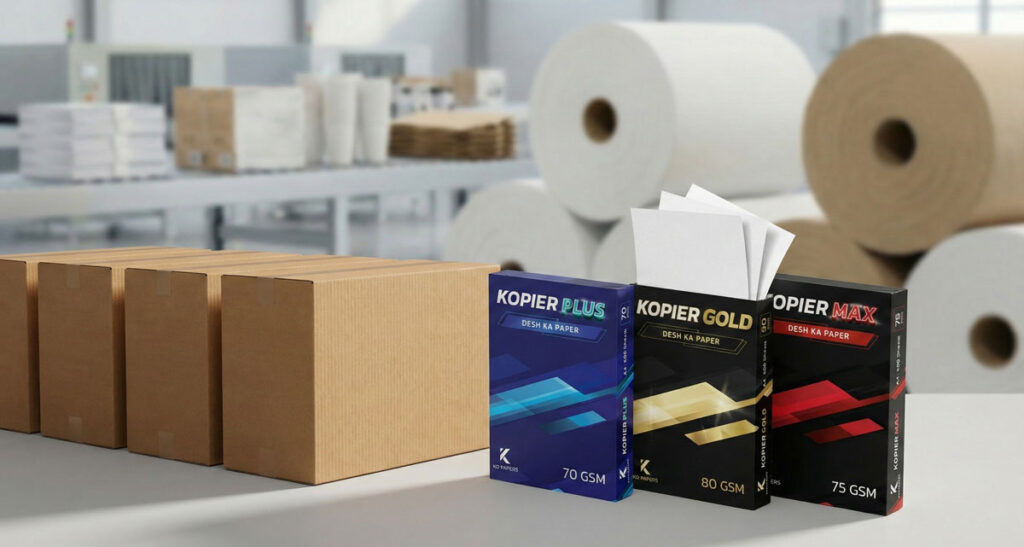
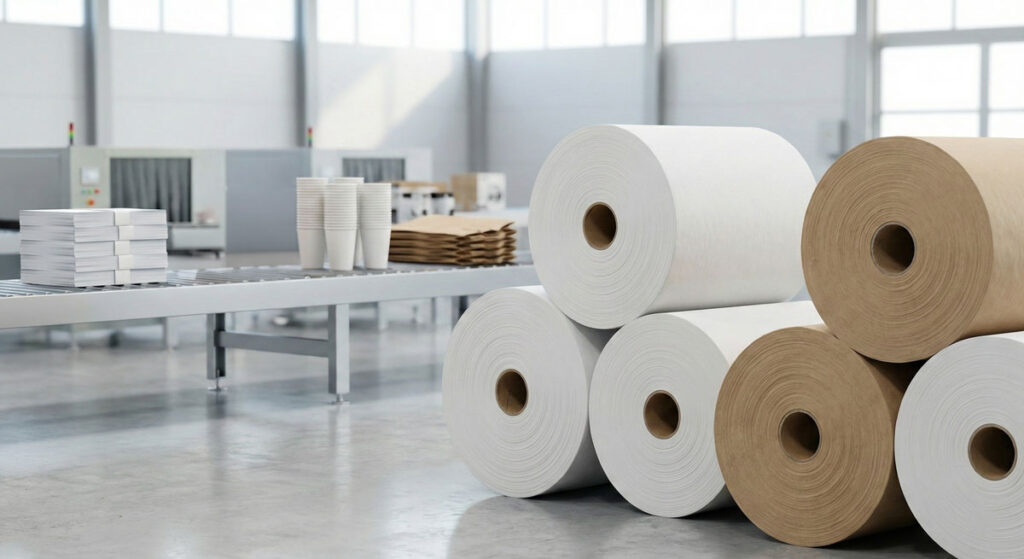
Packaging is often evaluated by appearance and structure. Box design, flute profiles, and print quality usually receive the most attention. However, one of the most critical factors influencing packaging performance is the paper itself.
Packaging grades define how corrugated boxes perform under stacking, storage, and transit conditions. When packaging fails, the root cause is frequently linked to liner paper that is not suited to the application.
Understanding packaging grades is essential for businesses that depend on reliable packaging across their supply chains.
The Role of Packaging Paper in Corrugated Performance
In corrugated packaging, liner paper contributes directly to compression strength, load-bearing capacity, and durability. It determines how well a box retains its shape under pressure and how it performs during handling and transportation.
Inconsistent liner quality can lead to crushed cartons, reduced stacking strength, and damaged goods. These issues are often blamed on box design, but the underlying problem lies in paper performance.
As a leading kraft paper manufacturer, KR Papers focuses on engineering packaging grades that deliver dependable strength and consistency across converting and corrugation processes.
Consistency Is as Important as Strength
Higher strength alone does not guarantee better packaging performance. Consistency in formation, moisture balance, and fibre distribution is equally critical.
When paper behaves unpredictably, it affects runnability, bonding, and final box integrity. These challenges become more visible at scale, particularly in export packaging, industrial logistics, and high-stacking environments.
Packaging paper suppliers in India increasingly invest in controlled manufacturing systems to ensure reliable performance. KR Papers applies this approach across its packaging grades to help converters maintain quality and operational efficiency.
Matching the Grade to the Application
Different packaging applications place different demands on liner paper. E-commerce cartons, retail packaging, and heavy-duty industrial boxes all require specific performance characteristics.
Using a grade that is not aligned with the end requirement can result in overuse of material or unexpected failures. Selecting the right packaging grade helps businesses optimise strength, cost, and performance without compromise.
KR Papers manufactures specialised packaging grades designed to meet diverse packaging needs. By offering multiple kraft and liner options, the company supports converters and brands in choosing paper that matches real-world conditions.
Packaging as a Supply Chain Decision
Packaging influences more than protection. It affects logistics efficiency, storage stability, and customer satisfaction. Box failures can disrupt entire supply chains and damage brand credibility.
Working with an experienced packaging paper manufacturer allows businesses to reduce variability and improve consistency across operations. Stable paper supply supports predictable output, reduced wastage, and better long-term performance.
For global buyers sourcing from India, manufacturers like KR Papers bring the advantage of scale, application expertise, and specialised grade development.
Why Packaging Grades Deserve Strategic Attention
Packaging is the first line of protection and the final presentation of a product. While design and structure add value, it is the paper grade that determines whether packaging performs as intended.
Understanding packaging grades shifts procurement from reactive problem solving to informed decision making. It allows businesses to build packaging systems that are reliable, efficient, and fit for purpose.
As packaging requirements continue to evolve, the role of specialised kraft and packaging paper manufacturers will only become more important.