Understanding Moisture Control in Paper Manufacturing and Why It Matters

If you manufacture corrugated boxes, or if you source them for secondary and transit packaging, the paper grade you use as the facing layer determines how your box performs in the field. That facing layer is called the liner, and in most standard corrugated board constructions, it is made from test liner.
Test liner is one of the most widely used packaging paper grades in the world. It is also one of the least understood at the procurement level. This post explains what test liner is, how it is made, what its key performance properties are, and what buyers in export-oriented markets should look for when sourcing it.
Test liner is a recycled-fibre paper used as the outer and inner facing layer of corrugated board. The name comes from the Cobb test and burst strength test historically used to qualify the grade. It is produced using recycled paper and board as the primary raw material, which distinguishes it from virgin kraft liner, which uses fresh wood pulp.
In a standard single-wall corrugated board construction, there are three paper layers: the outer liner (the face you see on the outside of the box), the fluted medium (the wavy layer in between), and the inner liner (the face on the inside of the box). Test liner is used for one or both of the facing layers depending on board specification and end-use requirements.
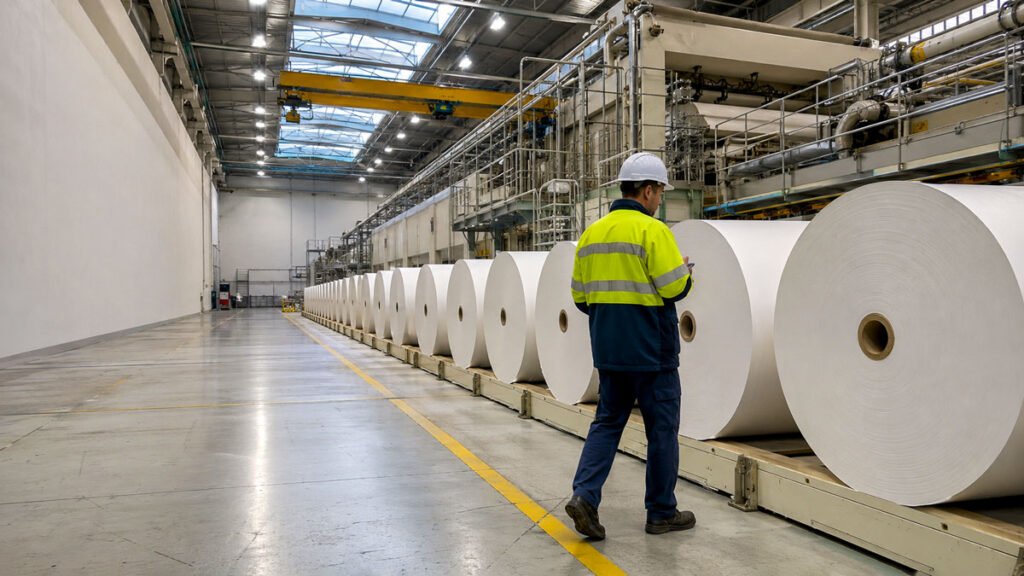
The manufacturing process begins with sorted recycled paper and board, which is pulped in water to break down the fibre structure. The resulting pulp is cleaned, refined, and formed into a sheet on a paper machine. The sheet is pressed and dried to the required moisture content, then wound into large reels for supply to corrugated board converters.
The quality of the recycled fibre input, the degree of refining, and the consistency of the forming and drying process all directly affect the performance properties of the finished test liner.
Burst Strength
Burst strength measures how much hydraulic pressure a paper sample can withstand before rupturing. For test liner, this is the primary indicator of how a corrugated box will perform when a corner is struck, when the box is dropped, or when it is compressed against a hard surface during transit. A liner with insufficient burst strength fails at the point of impact, compromising the protection of the contents.
Flat Crush Resistance (FCT)
Flat crush resistance measures the ability of the corrugated board structure to resist compression in the vertical direction. While this property is primarily associated with the fluted medium, the liner contributes to overall board stiffness and compression resistance, particularly under pallet stacking loads in warehouse and shipping environments.
GSM (Grams per Square Metre)
Test liner is available in a range of GSM values, with 100 GSM, 120 GSM, and 150 GSM being common grades for standard corrugated applications. Higher GSM generally corresponds to greater strength, but the specific grade required depends on the box construction, the weight of the contents, and the transit conditions the packaging will face.
Surface Formation
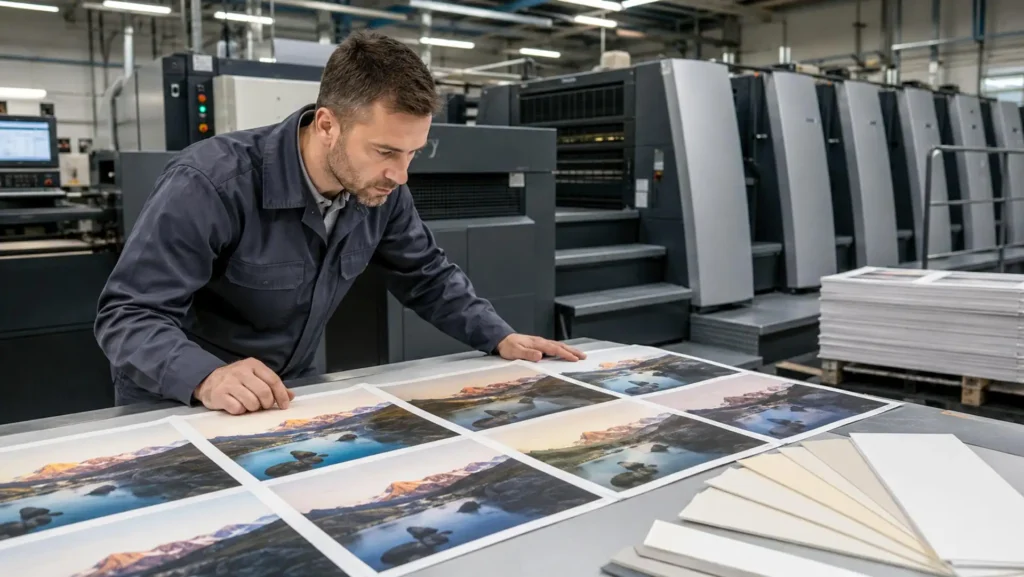
Surface formation refers to how uniformly the fibres are distributed across the sheet surface. For test liner, consistent formation is critical for flexographic printing, which is the standard process used to apply barcodes, product information, brand graphics, and handling instructions directly onto the box face. Uneven formation causes ink absorption variation, which results in barcodes that do not scan reliably and printed information that is difficult to read at logistics checkpoints.
Buyers often encounter both grades when specifying corrugated board. The practical differences are:
For most standard corrugated box applications, test liner at the appropriate GSM and burst strength specification is entirely sufficient. Kraft liner is specified where higher strength, premium appearance, or print quality requirements make the additional cost worthwhile.
For buyers sourcing test liner from India, a few factors are worth evaluating carefully.
Consistency across production runs. The recycled fibre input for test liner varies in quality depending on what is available in the recovered paper market. A reliable manufacturer controls for this by maintaining consistent refining and screening processes that deliver stable output properties regardless of input variation.
GSM tolerance. Corrugated board converters set their machine parameters to a specific GSM. Liner that consistently runs outside the specified GSM range causes machine misfeeds, bond failures between liner and medium, and increased waste on the converting line. Ask for GSM tolerance data across production runs, not just nominal values.
Burst strength certification. Reputable manufacturers provide burst strength test certificates with each shipment, typically tested to ISO 2758 or TAPPI T403 standard. Verify that the testing is done on the actual production lot being shipped, not on representative samples from a different run.
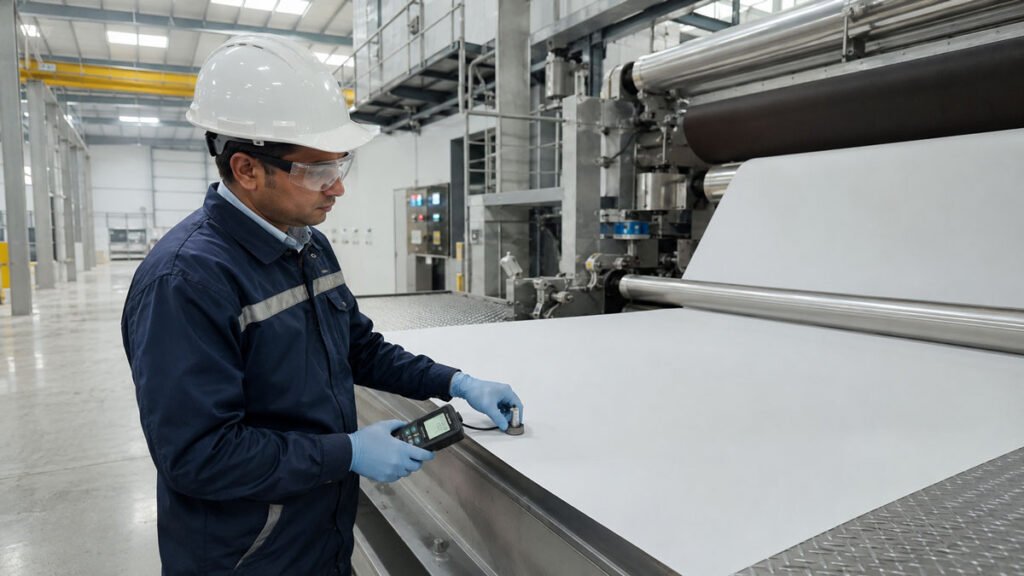
Reel dimensions and moisture content. Test liner supplied in reels needs to be wound to the converter’s specified width and diameter, and delivered at consistent moisture content. Moisture variation causes dimensional instability on the converting line and affects the quality of the board produced.
KR Papers manufactures test liner from its facility in Shahjahanpur, Uttar Pradesh for supply to corrugated board manufacturers across domestic and export markets. Our test liner is produced with controlled GSM, burst strength specification, and surface formation for flexographic printing applications. We supply in reels to converter specifications and provide batch testing data with each shipment.
If you are a corrugated board manufacturer or a packaging buyer looking for a reliable test liner supplier in India, we are open to discussing your requirements.
Get in touch: www.krpapers.com
KR Papers | Paper Manufacturer | Shahjahanpur, Uttar Pradesh, India | Est. 1995
At KR Papers, we craft premium, eco-friendly paper solutions that blend quality, innovation, and sustainability to meet diverse customer needs.
© 2026 KR Pulp and Papers Limited. All rights reserved.
WhatsApp us